New High-Performance Single-Coat System Cuts Application Times
A new protective coating system recently launched by Sherwin-Williams is reported to save time and enhance durability! Here at D&D Coatings we were intrigued and wanted to explore this super single-coat system in more detail to find out if the hype is justified.
So Does Acrolon® 680 Really Cut Application Times?
Well, the short answer is yes — in the right conditions it can indeed cut application times.
Acrolon® 680 is a rapid-curing, high-performance protective coating from Sherwin-Williams, developed specifically to reduce downtime, labour hours and project times on steel protection work. On of the biggest advantages of this single-coat system is that it combines very fast dry-to-handle times with the ability to be applied in fewer coats than traditional epoxy + polyurethane systems.
In a nutshell this means:
Faster return to service
Shorter access hire (MEWPs, scaffolding, encapsulation)
Reduced weather-related delays
Lower overall labour costs
Bridge rolled beams and plate girder coating.
On many projects undertaken by us and other contractors, Acrolon® 680 could replace a conventional 2 or 3-coat system with a single high-build coat, which is where the real time saving comes from.
What types of metal surfaces can Acrolon® 680 single-coat system be applied to?
Acrolon® 680 is primarily designed for ferrous metal substrates, including:
Industrial plant and pipework
Handrails, balustrades and gantries
Fabricated steelwork
Bridges and infrastructure steel
Structural steel
Mild steel
Carbon steel
Chemical plant pipework re-coating in progress.
It is intended for use where steel needs long-term corrosion protection along with fast installation or refurbishment programmes.
Freshly coating steel machinery with selected components masked off.
Can it be applied to oxidised or rusty steel?
Yes — but within limits!
One of Acrolon® 680’s key advantages is its tolerance to less-than-perfect surface preparation compared to traditional epoxy systems.
Staff cleaning steel substrate on storage tank ready for coating.
It can be applied to mechanically prepared steel (e.g. Swedish StandardSt 2 / St 3)
Light to moderate surface oxidation can be tolerated providing loose rust, mill scale and contaminants are removed
The surface must be sound, dry and free from oil, grease and salts
However, Acrolon® 680 is not a “paint over everything” solution:
This makes it particularly useful for maintenance and refurbishment projects, where full blast cleaning may not be practical.
What is Acrolon® 680 made from and what about VOCs?
Acrolon® 680 is based on a high-performance urethane technology, engineered for:
Rapid cure
High film build
Excellent corrosion resistance
Long-term durability
High VOC protective face mask and goggles.
In terms of VOCs:
It is generally classed as low-VOC for a high-performance protective coating
Typical VOC levels are significantly lower than many traditional solvent-borne systems
Exact VOC content varies by region and specification, but it is designed to support modern environmental and site compliance requirements
Always refer to the project-specific Product Data Sheet (PDS) for precise figures.
Recommended areas of use
Acrolon® 680 is commonly specified for:
Structural steel protection
Bridges and highways infrastructure
Industrial plants and factories
Power stations and energy assets
Commercial steel frameworks
Marine-adjacent environments (non-immersion)
Refurbishment and maintenance projects where downtime is critical
It is especially valuable where access time is limited or operational shutdowns are costly.
Steel tank following single coating of the new Acrolon® 680 system.
Recommended application methods
Acrolon® 680 is highly versatile and can be applied using:
Airless spray (recommended for speed and film build)
Brush
Roller (small areas or touch-ups)
Airless spray is typically preferred on:
Large steel structures
Bridges
Industrial frameworks
High-production environments
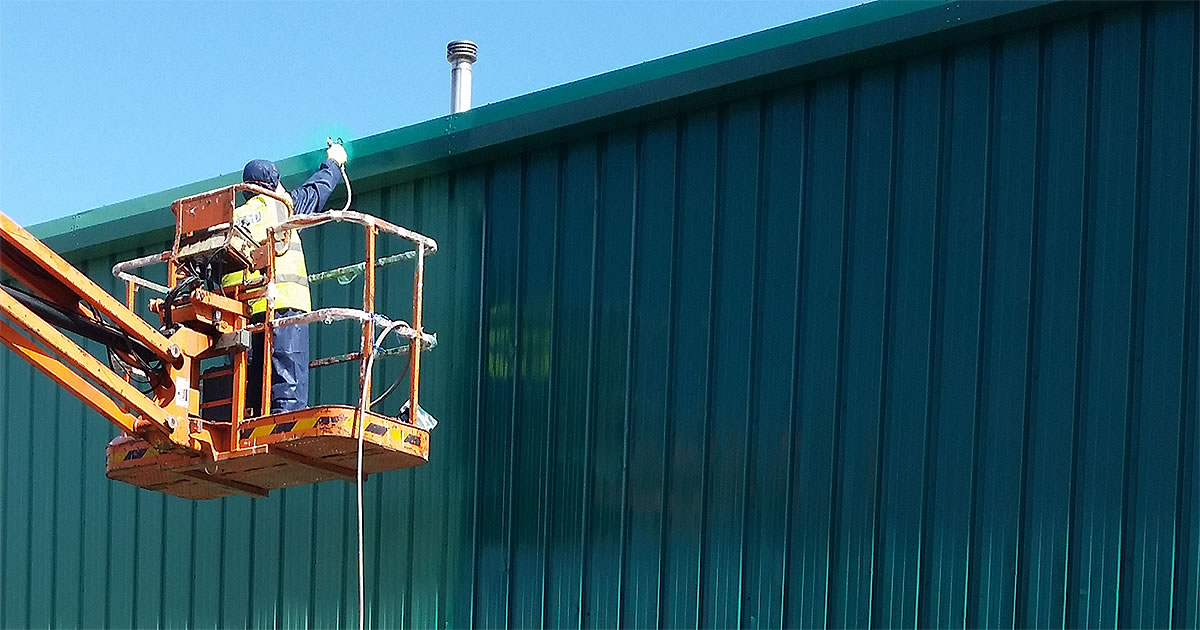
Spray coating steel cladding in progress at Darland Sports Centre in Wrexham, North Wales.
Its fast cure means recoating windows are short, even in cool or marginal weather conditions.
Conclusion – Instruction & practical single-coat system guidance
If you are considering Acrolon® 680 for a project, the key to success lies in matching the coating to the environment and preparation level. While it offers impressive tolerance to marginal conditions and significantly reduces application time, surface preparation still matters — especially if long-term durability is the goal.
Good clean and surface preparation of the substrate is crucial for a successful outcome.
For refurbishment projects, Acrolon® 680 can be an excellent solution where full abrasive blasting is impractical, allowing steel assets to be protected quickly and efficiently with minimal disruption. On new steelwork, it can dramatically shorten programmes by reducing coat numbers and curing delays.
As with any high-performance coating system, project-specific specification, site conditions and manufacturer guidance should always be followed to ensure the expected service life is achieved.
Have a question?
Attention plant managers and owners; if you have a question about Single-Coat Systems and how they could benefit you, our operations team are here to assist and will be happy to help with any questions. D&D Coatings are approved industrial coatings contractors for all the major manufacturers and we operate across the UK and Ireland. We also offer component repair as part of our comprehensive industrial steel refurbishment and protection projects. Call Sarah, Jayne and the team on 01606 554040 (office hours) or use our contact form to send a message — thank you!